
Your Garage Door Springs Are Under More Stress Than You Think
Every time you open and close your garage door, the springs do the heavy lifting — literally. A standard residential garage door can weigh anywhere from 130 to 350 pounds, and it's the springs that counterbalance all of that weight. Most homeowners in Rochester don't think about their garage door springs until something goes wrong. But by the time a spring snaps, you're dealing with a door that won't open, potential property damage, and even a safety hazard for your family.
The good news is that garage door springs rarely fail without warning. If you know what to look for, you can catch the problem early and schedule a replacement on your terms — not in the middle of a hectic Monday morning when you're trying to get to work.
How Long Do Garage Door Springs Last?
Most standard torsion springs are rated for approximately 10,000 cycles. One cycle equals one full open and one full close. If your household opens and closes the garage door four times a day, that works out to roughly seven years of use. Families that use the garage as a primary entrance may cycle the door six to eight times daily, which shortens the lifespan to about four or five years.
If your garage door system is approaching that age range and you haven't had the springs replaced, it's worth paying closer attention to how the door is performing. Here in Rochester, the combination of age and our temperature swings between seasons can accelerate wear on springs even further.
7 Warning Signs Your Garage Door Springs Are Failing
1. The Door Feels Heavier Than Usual
Try this simple test: pull the emergency release cord to disconnect the opener, then manually lift the door about halfway. A properly balanced door with healthy springs should stay in place on its own. If it feels unusually heavy or slides back down immediately, your springs are losing tension and struggling to support the door's weight.
2. The Door Opens Slowly or Unevenly
When springs start to weaken, your opener has to work harder to lift the door. You might notice the door rising more slowly than it used to or appearing crooked as it travels along the tracks. An uneven door often means one spring is weaker than the other, which puts extra strain on the entire system.
3. You Hear Loud Squeaking or Grinding
Some noise during operation is normal, but a sudden increase in squeaking, grinding, or popping sounds can indicate that the spring coils are wearing out. Stretched or corroded coils create friction and resistance that you'll hear every time the door moves.
4. Visible Gaps in the Spring Coils
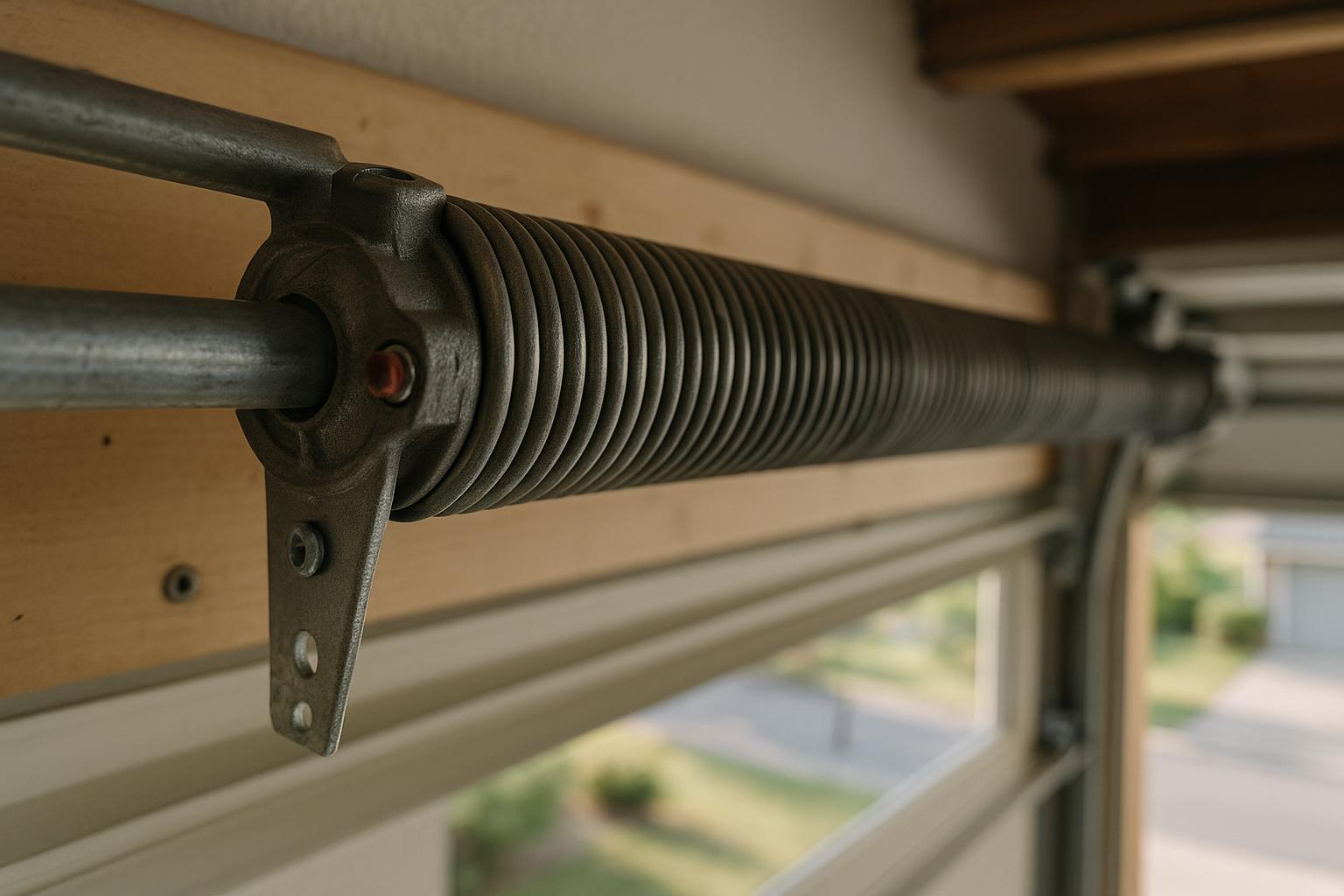
Take a look at the torsion spring mounted above your garage door. On a healthy spring, the coils are tightly wound with no visible separation. If you notice gaps between the coils — places where the spring looks stretched out — that's a clear sign the spring is losing its integrity and could snap soon.
5. The Door Slams Shut Quickly
A failing spring can't control the door's descent properly. If your garage door drops faster than normal when closing, or if it slams the last few inches to the ground, the springs aren't providing enough counterbalance. This is both a mechanical problem and a serious safety concern, especially if you have children or pets.
6. The Opener Is Straining
Your garage door opener is designed to guide the door — not to lift all of its weight. When springs weaken, the opener compensates by working harder. You might notice the motor running louder, the unit vibrating more, or the opener stopping mid-cycle because of the excess load. Ignoring this can burn out your opener motor, turning a spring replacement into a much more expensive repair.
7. Rust or Corrosion on the Springs
Rochester's humid summers and wet winters create ideal conditions for rust. If your springs show visible rust or corrosion, the metal is weakening. Corroded springs have a significantly shorter lifespan because rust increases friction between the coils and eats away at the metal's structural strength. Regular lubrication can slow this process, but once corrosion is advanced, replacement is the safest option.
Why You Shouldn't Replace Garage Door Springs Yourself
We understand the temptation to handle repairs on your own — there's no shortage of DIY videos online. But garage door springs are under extreme tension, and attempting to remove or install them without the proper tools and training can result in serious injury. Torsion springs, in particular, store enough energy to cause broken bones, lacerations, or worse if they release unexpectedly.
Professional technicians use specialized winding bars and follow strict safety procedures to handle spring replacements. It's one of the most common calls we get at Rochester Garage Door Service, and for good reason — it's a job best left to someone with experience.
Should You Replace One Spring or Both?
If one spring breaks, we almost always recommend replacing both at the same time. Here's why: if one spring has reached the end of its lifespan, the other one is likely close behind. Replacing both ensures balanced performance and avoids the cost of a second service call a few months later. It also reduces uneven stress on your opener and tracks, which helps the entire system last longer.
How Regular Maintenance Helps
An annual garage door tune-up can extend the life of your springs and catch early signs of wear before they become emergencies. During a maintenance visit, a technician will:
- Inspect springs for rust, gaps, and wear
- Lubricate springs, hinges, and rollers
- Test the door's balance and alignment
- Check the opener's performance under load
- Tighten hardware and inspect cables
For homeowners across Rochester, Greece, Irondequoit, and the surrounding areas, scheduling maintenance in the spring or fall — before our most extreme weather hits — is a smart way to avoid unexpected breakdowns.
Don't Wait for the Snap
A broken garage door spring is one of the most common — and most preventable — garage door emergencies we see. If you've noticed any of the warning signs listed above, don't wait for the spring to break completely. A proactive replacement is faster, safer, and often less expensive than an emergency repair.
At Rochester Garage Door Service, we provide honest assessments and upfront pricing for spring replacements throughout Rochester and the surrounding communities. Whether your springs are showing their age or you just want a professional to take a look, give us a call. We'll get your door back in balance and keep it running safely for years to come.