
That Frustrating Moment When Your Garage Door Won't Stay Closed
You press the button on your garage door remote, watch the door start its descent, and then — right before it reaches the floor — it reverses and goes back up. You try again. Same thing. Maybe it works on the third try, maybe it doesn't. Either way, you're standing in your Rochester driveway in January wondering why your garage door has suddenly developed a mind of its own.
This is one of the most common garage door complaints we hear from homeowners across Rochester, Greece, Irondequoit, and the surrounding areas. The good news is that a reversing garage door usually has a straightforward explanation. The better news is that most of these issues can be resolved quickly by a trained technician — and some you can even troubleshoot yourself.
Understanding Why Garage Doors Reverse
Modern garage door openers are equipped with safety mechanisms designed to prevent the door from closing on a person, pet, or object. These systems are required by federal law and have prevented countless injuries since they became mandatory in 1993. When your door reverses unexpectedly, it's almost always because one of these safety systems thinks something is in the way — even when nothing is.
Here are the most common reasons your garage door reverses before reaching the floor, and what you can do about each one.
1. Misaligned Safety Sensors
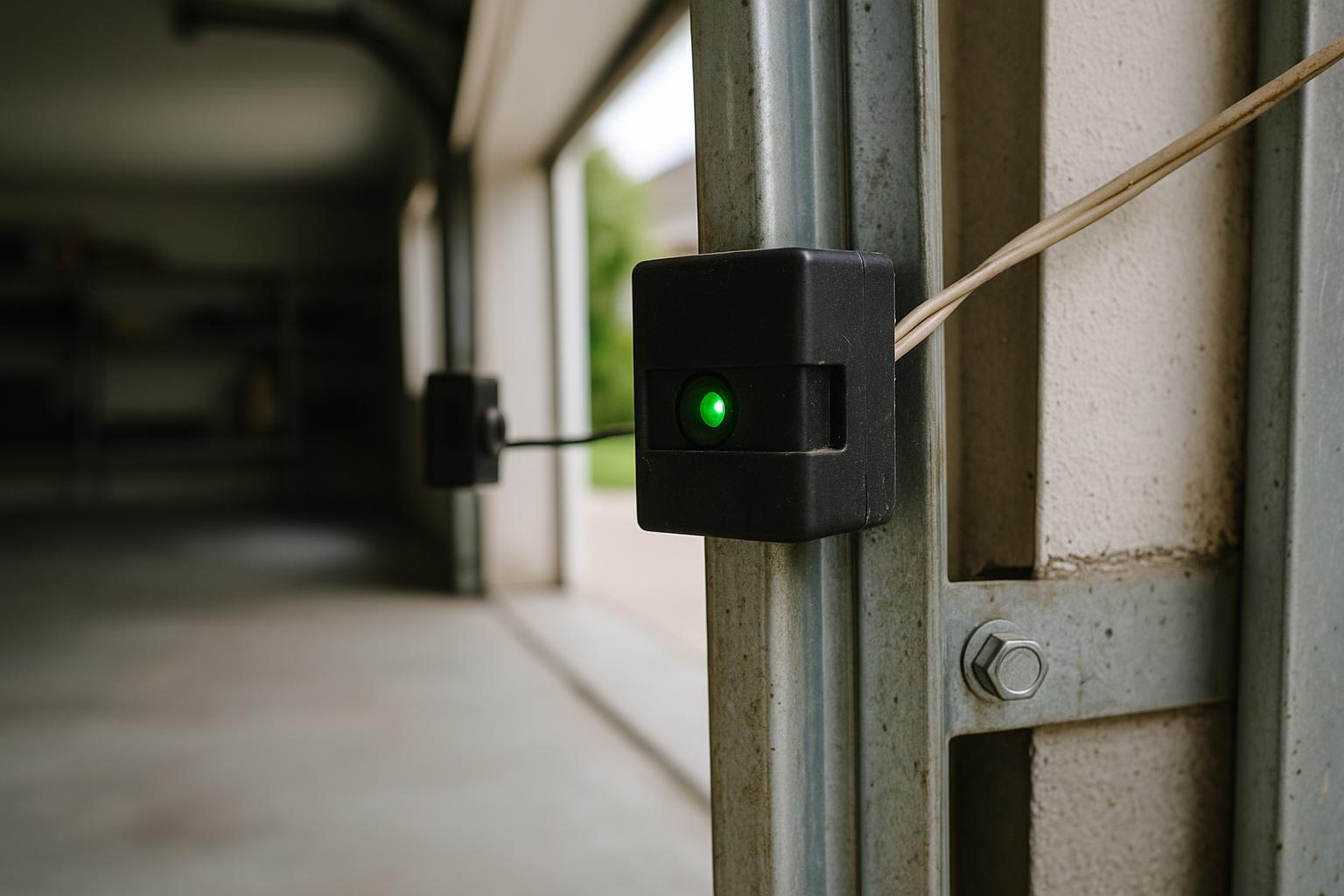
This is the number one cause of a garage door that reverses before closing. Every garage door opener manufactured after 1993 has two photo-eye sensors mounted near the bottom of the door tracks, one on each side. These sensors send an invisible infrared beam between them. If anything breaks that beam — a child, a bicycle, a leaf — the door reverses to prevent a potential injury.
The problem is that these sensors can easily get bumped out of alignment. A stray soccer ball, a broom handle leaning against the track, or even vibrations from the door's daily operation can shift them just enough to break the beam. When that happens, the opener thinks there's an obstruction and reverses the door.
What to check:
- Look at the LED lights on both sensors. Typically, one will have a green light and the other an amber or red light. If either light is off or blinking, the sensors are misaligned.
- Gently adjust the sensor that's blinking until both lights are solid and steady.
- Make sure nothing is blocking the beam path between the two sensors, including cobwebs, dirt, or debris.
2. Dirty Sensor Lenses
Even if your sensors are perfectly aligned, dirty lenses can weaken the infrared beam enough to cause intermittent reversing. Rochester's seasons bring plenty of dust, pollen, road salt residue, and moisture into garages, all of which can coat sensor lenses over time.
What to do: Wipe both sensor lenses gently with a soft, dry cloth. Avoid using harsh chemicals or abrasive materials that could scratch the lens surface.
3. Incorrect Close-Limit Settings
Your garage door opener has adjustable settings that tell it how far the door should travel before it considers itself fully open or fully closed. These are called limit settings. If the close-limit setting is off, the opener may think the door has hit an obstruction when it's actually just reaching the floor.
When the door contacts the ground and the opener still thinks it should travel further, the resistance triggers the auto-reverse function. This is especially common after a new opener installation or when springs have been replaced, since the door's travel distance may have changed slightly.
What to do: Most openers have limit adjustment screws on the back or side of the motor unit. However, adjusting these requires some trial and error, and setting them incorrectly can create new safety issues. If you're not comfortable making this adjustment, it's best to call a professional.
4. Worn or Damaged Tracks
The metal tracks that guide your garage door can develop bends, dents, or rust over time. When the rollers hit a damaged section of track, the added resistance can trigger the opener's force sensor, causing it to reverse. In Rochester, where temperature swings between summer and winter are dramatic, metal tracks can expand and contract enough to loosen mounting brackets and create misalignment.
What to check:
- Visually inspect both tracks for obvious bends, dents, or gaps.
- Check that the tracks are securely fastened to the wall and that mounting brackets haven't loosened.
- Look for rust or debris buildup inside the tracks that could impede roller movement.
5. Broken or Worn Rollers
Garage door rollers can crack, chip, or wear flat over years of use. When a roller doesn't spin smoothly, it creates friction and resistance that the opener may interpret as an obstruction. Nylon rollers tend to crack in cold weather, while steel rollers can rust and seize — both common issues in our Western New York climate.
What to do: Roller replacement is a relatively quick repair for a trained technician. While some homeowners attempt this themselves, it's important to note that rollers in the bottom bracket are under spring tension and can be dangerous to remove without proper tools and training.
6. Force Setting Is Too Low
Garage door openers have an adjustable force setting that determines how much resistance the motor will push through before reversing. If this setting is too low, the door may reverse from normal friction rather than an actual obstruction. Seasonal changes can affect this — a door that closes fine in summer may struggle in winter when lubricant thickens and weatherstripping stiffens.
What to do: You can increase the force setting slightly using the adjustment controls on your opener. Make small adjustments and test the door each time. Be careful not to set the force too high, as this can compromise the safety reverse function.
7. Damaged or Worn Weatherstripping
The rubber weatherstrip along the bottom of your garage door creates a seal against the floor. Over time, this strip can become stiff, warped, or misshapen — especially after enduring Rochester winters. If the weatherstripping catches or bunches up as the door closes, it can create enough resistance to trigger a reversal.
What to do: Inspect the bottom seal for cracks, stiffness, or deformation. Replacing weatherstripping is an affordable fix that also improves your garage's insulation and keeps out water, pests, and drafts.
When to Call a Professional
Some of the fixes above are simple enough for a handy homeowner to tackle. But if you've checked the sensors, cleaned the lenses, and inspected the tracks without finding the problem, it's time to call in a professional. Electrical issues with the opener, problems with the circuit board, or worn gears inside the motor unit all require specialized knowledge and tools.
There's also a safety consideration. Garage doors are the largest moving component in most homes, and the springs and cables that support them are under enormous tension. Attempting repairs beyond basic maintenance can result in serious injury if something goes wrong.
Keep Your Garage Door Running Reliably
A garage door that reverses unexpectedly is more than an inconvenience — it's a security concern. An open garage is an invitation for theft, weather damage, and unwanted pests. If your door isn't closing reliably, addressing the issue promptly protects both your property and your peace of mind.
At Rochester Garage Door Service, we help homeowners and businesses throughout Rochester, Gates, Henrietta, Webster, and the surrounding communities diagnose and fix garage door problems quickly. Whether it's a simple sensor adjustment or a complete opener replacement, we show up on time and get the job done right. If your garage door is giving you trouble, give us a call — we're happy to help.